|
|
|
PRODUCTS MANUFACTURED BY:
|
|
|
|
|
|
|
|
|
|
|
 |
|
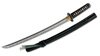
| Hanwei Lion Dog Wakizashi (SH2449) |
Points: 25

|
The Lion Dog Wakizashi features an O-Kissaki blade of Hanwei's own high-alloy HWS-1S steel, which combines superior performance with an outstanding O-choji hamon. This steel is made in Hanwei's new factory, with high-tech equipment, producing a very pure advanced-metallurgy blade with the best edge-holding capability and resilience of any blade ever produced by Hanwei. The outstanding performance characteristics of blades forged from HWS-1S steel derive from a combination of the careful selection of alloying elements and a complex processing procedure, basically involving the manipulation of the steel’s carbon content across the blade section. This results in a very tough and resilient blade with a hard, highly abrasion-resistant edge
|
|
|
|
|
|
 |
|
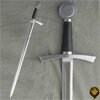
| Hanwei Lionheart Sword (SH2367) |
Points: 11
|
The single-hand Lionheart Sword is typical of the cruciform-hilt style of the crusading knights of Europe in the 12th and 13th centuries. The wheel pommel and slightly turned-down bow-tie guard make this a very attractive sword indeed! Iberia Swords are crafted in much the same way as swords were made centuries ago, except that the blades are now forged from high-carbon spring steel, a resource unavailable off-the-shelf to the smiths of the old. The blade finish is far from being polished, again more closely replicating what the medieval swordsmith was able to achieve. Except as noted, grips are leather-covered hardwood. Fittings are either steel or solid brass. Except, where shown all of these swords have scabbards of leather-covered fiberglass with steel lockets and chapes and removable suspension rings. These swords will appeal to the re-enactor who wants a sword with the same appearance as the originals.
|
|
|
|
|
|
 |
|
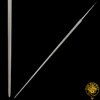
| Hanwei Live Rapier Blade (OH2327) |
Points: 4
|
Live Rapier Blade for rapiers: Renaissance Style Swept Hilt Rapier (SH1024), Bone Handled Swept Hilt Rapier (SH1092), Solingen Rapier (SH2205, SH2205N), Torino Rapier (SH2204, SH2204N), Gustav Rapier (SH2206, SH2206N).
|
|
|
|
|
|
 |
|
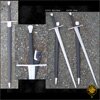
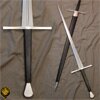
| Hanwei Longsword - Tinker Pearce Blunt Trainer (SH2395) |
Points: 13
|
The Blunt Trainer longsword features nearly identical handling of its sharp companion, but with thick edges (2mm) and a rounded tip for safe sparring practice.
Tinker Pearce has developed these matching longswords to satisfy the need of every Western Martial Arts practitioner and sword enthusiast, to have a matching set of sharp and blunt swords for cutting and safe training practice. The swords meet Tinker`s exacting quality requirements and are built in much the same way as his custom pieces. Each blade is forged from 5160 Spring Steel, Marquenched to the desired hardness of 50-53 Hrc while the tang is drawn back to the low 30s Hrc. Teh very end of the tang is threaded to fit an allen nut recessed into the pommel which allows for dimantling of the hilt assembly for inspection or to exchange blades if needed.
What others are saying about the Tinker Pearce Longswords:
"I had the opportunity to handle the prototype Tinker Pearce Line Longswords by CAS/Hanwei, and they are beautiful, well-balanced, quick-handling swords at an excellent price. The sharp and blunt versions handle almost identically in cuts, thrusts, and quick posta (guard) transitions. These promise to be the mid-priced training weapon of choice for longsword studies."
Sean Hayes, Maestro d`armi, Northwest Fencing Academy and University of Oregon
|
|
|
|
|
|
 |
|
| Hanwei Longsword - Tinker Pearce Sharp (SH2394) |
Points: 15
|
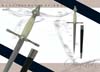
Tinker Pearce has developed these matching longswords to satisfy the need of every Western Martial Arts practitioner and sword enthusiast, to have a matching set of sharp and blunt swords for cutting and safe training practice. The swords meet Tinker`s exacting quality requirements and are built in much the same way as his custom pieces. Each blade is forged from 5160 Spring Steel, Marquenched to the desired hardness of 50-53 Hrc while the tang is drawn back to the low 30s Hrc. The very end of the tang is threaded to fit an allen nut recessed into the pommel which allows for dimantling of the hilt assembly for inspection or to exchange blades if needed.
|
|
|
|
|
|
 |
|
| Hanwei Main Gauche (matches SH1092) (SH2197) |
Points: 8
|
Our Renaissance-style Swept Hilt Rapiers trace their origins to early 17th century Europe, where swordplay with the Rapier was considered an essential part of a gentleman's education and was often used in resolving gentlemanly disagreements. Blades generally originated in one of the blade making centers such as Toledo or Solingen, but many differences in styling and hilt materials resulted from the local manufacture of hilts all over Europe. The Main Gauche, or left hand dagger, was often used with the rapier, providing an added dimension in both offense and defense, and the "Schools of Fence" which proliferated in Europe during this period taught the use of the two weapons in combination. The Main Gauche would often match the Rapier in styling, while incorporating features which maximized the effectiveness of the piece.
|
|
|
|
|
|
 |
|
| Hanwei Main Gauche - Wood Grip (matches SH1024) (SH2117) |
Points: 10
|
Our Renaissance-style Swept Hilt Rapiers trace their origins to early 17th century Europe, where swordplay with the Rapier was considered an essential part of a gentleman's education and was often used in resolving gentlemanly disagreements. Blades generally originated in one of the blade making centers such as Toledo or Solingen, but many differences in styling and hilt materials resulted from the local manufacture of hilts all over Europe. The Main Gauche, or left hand dagger, was often used with the rapier, providing an added dimension in both offense and defense, and the "Schools of Fence" which proliferated in Europe during this period taught the use of the two weapons in combination. The Main Gauche would often match the Rapier in styling, while incorporating features which maximized the effectiveness of the piece.
|
|
|
|
|
|
 |
|
| Hanwei Mammen Axe (XH2041) |
Points: 8
|
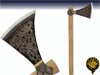
The Mammen Axe, one of the best-known and best-decorated examples of the small Viking throwing axe, is a perfect example of the Viking's blend of art and war. Excavated from a famous 10th century barrow near Mammen Denmark, the original is decorated with silver inlaid engraving in a typical Celtic manner. Our recreation of this beautiful piece is a tribute to the creative as well as the martial side of this dynamic, influential culture.
|
|
|
|
|
|
 |
|
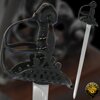
| Hanwei Mercenary Sword (SH2368) |
Points: 13
|
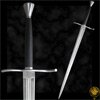
The Mercenary is an imposing sword in the 15th century style. It featuring a triple-fullered blade, steel S-curve guard and scent stopper pommel. Supplied with a leather-covered belt scabbard. Iberia Swords are crafted in much the same way as swords were made centuries ago, except that the blades are now forged from high-carbon spring steel, a resource unavailable off-the-shelf to the smiths of the old. The blade finish is far from being polished, again more closely replicating what the medieval swordsmith was able to achieve. Except as noted, grips are leather-covered hardwood. Fittings are either steel or solid brass. Except, where shown all of these swords have scabbards of leather-covered fiberglass with steel lockets and chapes and removable suspension rings. These swords will appeal to the re-enactor who wants a sword with the same appearance as the originals.
|
|
|
|
|
|
 |
|
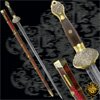
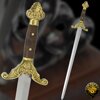
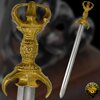
| Hanwei Ming Sword (SH2006) |
Points: 70
|
The pattern of the Ming Sword dates from the Ming Dynasty (1368 AD -- 1644 AD), which ruled China for almost three centuries after the fall of the Mongol controlled Yuan Dynasty. The beauty of this delightfully compact sword centers on its superb pattern-welded K120C blade, forged with a ridged central fuller providing the stiffness required for thrusting and the lightness required for speed. The grip is sculpted from brown buffalo horn, which is also used in thin, translucent wafers as a shell for the intricately decorated scabbard. The brass fittings are selectively decorated with dynastic designs plated in silver.
Recreated by the craftsmen of CAS Hanwei from the swords of the Lords of the great dynasties, these Chinese Gongfu swords represent the pinnacle of the sword maker's art, vividly illustrating the skills and creativity of the smiths of Imperial China.
|
|
|
|
|
|
 |
|
|
|
|
 |
|
|
|
|
 |
|
|
|
|
 |
|
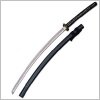
| Hanwei Miyamoto Musashi Daito (SH1016) |
Points: 30
|
Miyamoto Musashi, arguably the most famous swordmaster in Japanese history, fought more than 60 duels before retiring and writing his famous treatise on swordplay, the "Book of Five Rings". Musashi was well above average height and his Daito (long sword) was made to match his size. Development of the two-sword style of swordplay, with the Daito (long sword) and Wakizashi being used together, is credited to Musashi. Fittingly, we are able to offer both pieces with matching mounts. The Hanwei reproduction of the Musashi Daisho (SH1016, SH1017) is faithful to the original down to the famous double-ring iron tsubas. The Musashi Katana is mounted in black, with subtle copper inlays in the saya, and the tsuka-ito is in leather over ray skin. The blade is hand-forged in high-carbon steel and is edge-tempered using the traditional clay tempering method, resulting in a distinct hamon. Edge hardness is 60HRC, back hardness 40HRC. The grip is double-pegged to the tang for safety. Supplied with a protective cloth bag and traditional maintenance kit.
Forged high-carbon steel blade
Built for cutting
Traditional construction
|
|
|
|
|
|
 |
|
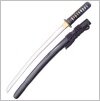
| Hanwei Miyamoto Musashi Wakizashi (SH1017) |
Points: 20
|
During the Muromachi period (1568-1603), the introduction of the pairing of the Katana (the curved sword) and Wakizashi was introduced. The Wakizashi, or the shorter companion blade to the Katana, was about 18 inches long. Only the warrior class - the Samurai - was allowed to wear the two swords, which remained a custom for the next several hundred years until abolished in the 19th century. This Wakizashi is the companion piece to the Musashi Miyamoto Katana (SH1016) with matching fittings and blade construction. Supplied with a protective cloth bag and traditional maintenance kit.
Hand forged high-carbon steel
Built for cutting
Traditional construction
|
|
|
|
|
|
|
Tags:
swords, sword, katana, wakizashi, tanto, japanese sword, medieval sword, viking sword, japanese swords, medieval swords, viking swords, knife, knives, saber, armour, movie swords, movie replicas, martial arts, sporting goods, sporting equipment,
|



 - New items
 - Clearance sale
 - Discounted items
 - Add to favorites