|
|
|
 |
|
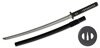
| Hanwei Practical Katana (SH1070) |
Points: 16

|
The Practical Katana gives the martial artist the opportunity to own and use a Hanwei sword at the cost of an economy sword. The blade is forged and differentially tempered, using the same process as the more expensive blades and producing an HRC60 edge and HRC40 back. The temper line is authentic and prominent. Cost savings are effected by using fittings which, while making no claims to authenticity, are very strongly built to withstand the rigors of cutting exercises in the dojo.
Forged high-carbon steel blade
Differential tempering
Hanwei made
|
|
|
|
|
|
 |
|
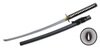
| Hanwei Practical Plus Katana (SH2073) |
Points: 22
|
The "Practical Plus" Katana provides a very economical cutting sword as dependable as the Practical Katana (SH1070), but using more traditional fittings and construction methods. The blade is forged and differentially tempered (HRC60 edge, HRC40 back) and the hamon is prominent. The Practical Plus features genuine Same (Rayskin) on the Tsuka, with a wrap (Tsuka-Ito) specially developed for its gripping qualities. The long tang is double-pegged for security. The fittings of the Practical Plus are decorated in a Japanese Dogwood motif with dragon menuki, and the handsome Tsuba is of an iron "sunburst" design with a brass habaki.
Fully functional
Hand-forged high-carbon steel blade
Differential tempering
|
|
|
|
|
|
 |
|
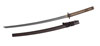
| Hanwei Three Monkey Katana (SH2329) |
Points: 40
|
The "Three Wise Monkeys" is a popular symbol of the "See no evil, hear no evil, speak no evil" proverb popular in many cultures around the world. The proverb itself is thought to have originated in China and was brought to Japan by a Buddhist monk, while the association with three monkeys appears to be a Japanese play on words. Our Three Monkey Katana (SH2329) and Wakizashi (SH2330) are built on traditional Shinogi Zukuri style blades with Bo-Hi to reduce weight and improve balance. The high-carbon blade is hand forged and differentially hardened. The blackened iron Tsuba features the "Three Wise Monkeys" in relief.
|
|
|
|
|
|
 |
|
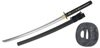
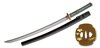
| Hanwei Ronin Katana (SH2360) |
Points: 50
|
The Story of the 47 Ronin is one of the most celebrated and influential tales of the Samurai from the Edo period. Lord Asano was a powerful Daimyo ordered by the Shogun to entertain guests of the Imperial Family. The highest ranking master of protocol, Kira, was given the task of teaching Asano, among others, proper matters of etiquette in this task. Lord Asano and Kira quickly grew to dislike each other and the teacher insulted his student at every opportunity. No longer able to contain himself, Asano drew his sword upon Kira, wounding him in the attack. This act led to Asano's ordered suicide (seppuku) and the confiscation of his property. On December 14, 1702, nearly one year after Asano's death, 47 of Asano's men (now Ronin), descended upon the mansion of Kira to exact their revenge.
|
|
|
|
|
|
 |
|
| Hanwei Praying Mantis Katana (SH2359) |
Points: 55
|
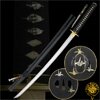
The Praying Mantis is a symbol of cunning and power in Japanese culture and is consequently a highly respected theme in Samurai swords. Built on our new L6/Bainite blade (detailed below) in the Shobu Zukuri style with Bo-Hi, and featuring superb koshirae, the Praying Mantis is a very desirable and functional piece. The subdued green silk ito and deep brown of the lacquered saya provide handsome contrast to the dark copper and golden accents of the tsuba, fuchi and kashira. The stalking mantis lies in wait for his next prey, mirroring the power and grace in this exceptional katana.
|
|
|
|
|
|
 |
|
| Hanwei Paper Crane Katana - Tamahagane (SH2294) |
Points: 100
|
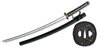
Our Paper Crane Daisho (SH2294-Katana / SH2328-Wakizashi) is without doubt the greatest achievement in sword making artistry yet available from Hanwei. The blade is crafted from Hanwei's own Tamahagane steel (see below) while the fittings reflect the atmosphere of the Japanese theater. The Daisho's name stems from the origami (the art of paper folding) cranes that decorate the striking Tsuba and Fuchi/Kashira, all of which feature highly-prized "Nanako" or stippled backgrounds. The Menuki feature thespian masks, a symbol shared by the Japanese theater and its western counterpart. The Saya of the katana houses a Kozuka (small knife) while that of the Wakizashi carries a Kogai (hair pick) The Kozuka and Kogai are decorated with musical instruments of the theater. The Paper Crane theme is carried to the outstanding hand woven silk Sageo, the result of many hours of skilled work on a hand loom.
|
|
|
|
|
|
 |
|
| Hanwei Bamboo Mat Katana (SH2438) |
Points: 30
|
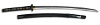
Our Bamboo Mat Katana features a chu-kissaki blade of Hanwei's own high-alloy HWS-2S steel, which combines impressive performance with a striking O-choji hamon.
|
|
|
|
|
|
 |
|
| Hanwei Lion Dog Katana (SH2439) |
Points: 40
|
The Lion Dog Katana features an O-Kissaki blade of Hanwei's own high-alloy HWS-1S steel, which combines superior performance with an outstanding O-choji hamon. This steel is made in Hanwei's new factory, with high-tech equipment, producing a very pure advanced-metallurgy blade with the best edge-holding capability and resilience of any blade ever produced by Hanwei.
|
|
|
|
|
|
 |
|
| Cheness Deluxe Carbon Steel Iaito (Iaito-1045) |
Points: 15

|
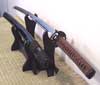
It is constructed in exactly the same way a carbon steel katana is... only blunted on the cutting edge. Hand forged, hand polished, full length nakago (tang), double mekugi (retaining pin). Perfect for those that want to practice kata using an iaito with the weight of a katana.
|
|
|
|
|
|
 |
|
| Hanwei Shinto Elite Katana (SH6004KGE) |
Points: 45
|
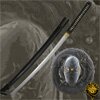
The Shinto Elite (SH6004KGE) features a hand-forged T10 high-carbon steel katana blade featuring the geometry of the Performance Series. The blade is differentially hardened using the traditional claying method. The Shinto is mounted in black and the tsuka-ito is made of premium black Japanese cotton. The saya is finished in a deep black lacquer with a black cotton sageo. A finely rendered dragon, detailed in gold, with true front-and-back detail, forms the black iron tsuba. The fittings are superbly antiqued adding to the aesthetics of the set. The Shinto is supplied with a protective cloth bag and traditional maintenance kit.
|
|
|
|
|
|
 |
|
| Hanwei Musashi Elite Katana (SH6003KGG) |
Points: 30
|
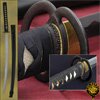
Miyamoto Musashi, arguably the most famous swordmaster in Japanese history, fought more than 60 duels before retiring and writing his famous treatise on swordplay, the "Book of Five Rings". Development of the two-sword style of swordplay, with the Daito (long sword) and Wakizashi being used together, is credited to Musashi. Mounted in black, the Musashi Elite is faithful to the original down to the famous double-ring iron tsubas. The tsuka-ito is in leather over ray skin. The blades are hand-forged in high-carbon steel, with new geometry to enhance cutting ability. It is edge-tempered using the traditional clay tempering method, resulting in a distinct hamon. Edge hardness is HRC60, back hardness HRC40. The grip is double-pegged to the tang for safety. The cutting style katanas (Elite, XL, XL Light) include a traditional maintenance kit.
|
|
|
|
|
|
 |
|
| Hanwei Tori Tanto (SH6007KFT) |
Points: 24
|
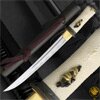
The Tori Tanto is built on a forged and folded blade with the handle wrapped in the highest quality ray skin. The Crane and Armour theme is carried through the furniture while the Saya matches the textured brown of the katana. This is undoubtedly one of the most elegant mounts ever crafted by CAS/Hanwei.
|
|
|
|
|
|
 |
|
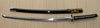
| Thaitsuki Hoso Kumiage Katana (KTN3) |
Points: 45
|
The Hoso Kumiage Japanese Katana (KTN3) is specially handmade and forged from special high carbon Japanese steel making it an extremely sharp, strong and flexible blade with bo-hi (groove).
Blade is clay tempered(40/60 HRC) , water quenched(not oil) and hand polished.
The tsuka (handle) is covered in same' (ray skin) and the Tsuka Ito (handle wrap) is 100% Japanese silk. The Koshirae (menuki, habaki, fuchi, kashira) are handmade from 99% silver.
The Hoso Kumiage Japanese Katana can be completely disassembled for full maintenance.
|
|
|
|
|
|
 |
|
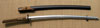
| Thaitsuki Kumori Katana (KTN4) |
Points: 45
|
The Kumori Japanese Katana (KTN4) is specially handmade and forged from special high carbon Japanese steel making it an extremely sharp, strong and flexible blade with bo-hi (groove). Blade is clay tempered(40/60 HRC) then quenched in the water. Polishing live blade,razor edge and notarae hamon.
The tsuka (handle) is covered in black same' (ray skin) and the Tsuka Ito (handle wrap) is 100% Japanese silk. The Koshirae (menuki, habaki, fuchi, kashira) are handmade from 99% silver.
The Kumori Japanese Katana can be completely disassembled for full maintenance
|
|
|
|
|
|
 |
|
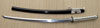
| Thaitsuki Suekoto Hondachi Katana (KTN5) |
Points: 60
|
The Suekoto Hondachi Japanese Katana (KTN5) is specially handmade and forged from special high carbon Japanese steel making it an extremely sharp, strong and flexible blade with bo-hi (groove). Blade is clay tempered(40/60 HRC) , water quenched(not oil) and hand polished. Black matt finish saya included with koiguchi(buffalo horn).
The tsuka (handle) is covered in black same' (ray skin) and the Tsuka Ito (handle wrap) is 100% Japanese silk. The Koshirae (sword mounting/fittings) are handmade from 99% silver.
The Suekoto Hondachi Japanese Katana can be completely disassembled for full maintenance.
|
|
|
|
|
|
|
|
Tags:
swords, sword, katana, wakizashi, tanto, japanese sword, medieval sword, viking sword, japanese swords, medieval swords, viking swords, knife, knives, saber, armour, movie swords, movie replicas, martial arts, sporting goods, sporting equipment,
|



 - Clearance sale
 - Discounted items
 - Add to favorites