|
|
|
 |
|
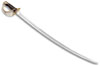
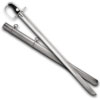
| Windlass British 1796 Heavy Cavalry Saber (501868s) |
Points: 10


|
The Austrian-designed British heavy cavalry sword of 1796 was used by British heavy cavalry units during the Napoleonic Wars. It was criticized for being unwieldy in combat, but was considered a powerful cutting weapon.
|
|
|
|
|
|
 |
|
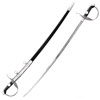
| Cold Steel Italian Dueling Saber (88SN) |
Points: 12
|
Most military sabers are effective for cutting and thrusting, but they can be heavy and are challenging to wield with precision for any length of time. The Italian Dueling Saber, however, is different! Its long, slim, moderately curved blade is feather light and you can easily write your name in scarlet with its razor edge.
|
|
|
|
|
|
 |
|
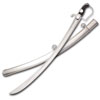
| Windlass British 1796 Pattern Light Cavalry Saber (501836s) |
Points: 10
|
This exact replica of an original antique weighs only 1 lb, 12 oz, and the blade features an extreme distal taper, enabling it to feel exceptionally lively. A full 5/8″ thick at the hilt, and tapers to a super thin 1/64″, 1″ from the tip. The blade is hand forged from tough 1080 high carbon steel and spring tempered and arrives fully sharpened.
|
|
|
|
|
|
 |
|
| Cold Steel Pirate's Cutlass (88CSY) |
Points: 10
|
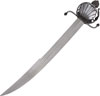
The Cold Steel Pirate's Cutlass saber has a wide triple-groove blade made of 1055 high carbon steel and a basket handguard. The scabbard is made of black leather with steel fittings.
|
|
|
|
|
|
 |
|
| Cold Steel Hungarian Saber (88RM) |
Points: 10
|
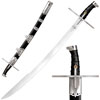
Hungary by virtue of its position on the world map is a country that straddles the cultural influence of both the East and the West. This influence is, of course, directly echoed in Hungarian weapons. The Hungarian Saber is primarily a cutting, slashing weapon mostly used from horseback although thrusting with it on foot was not unknown.
|
|
|
|
|
|
 |
|
| Sword Cold Steel Polish Saber (88RPS) |
Points: 20

|
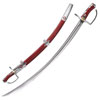
With a fully sharpened, distal tapered and strongly curved blade, the Polish Saber is capable of delivering exceptional cuts, while still remaining stiff enough for the thrust.
|
|
|
|
|
|
 |
|
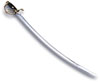
| Cold Steel 1796 Light Cavalry Saber |
|
Cold Steel 1796 Light Cavalry Saber. This saber was widely used by the British and their Prussian allies under General Blucher in the Battle of Waterloo. The blade was derived from the ferocious Indian Talwar and was reviled by the French who protested its use due to the horribly destructive wounds it inflicted.
|
|
|
|
|
|
 |
|
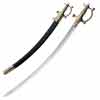
| Cold Steel 1830 Napoleon Saber (88NS) |
Points: 15
|
Cold Steel 1830 Napoleon saber is based on Napoleon's cavalry saber, widely used during Napoleonic wars and during American Civil War. The thick, moderately curved blade is forged out of 1055 Carbon steel and features a long, wide fuller and a very sharp, practical point.
|
|
|
|
|
|
 |
|
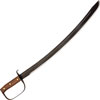
| Cold Steel Talwar Saber (88EITB) |
Points: 18
|
Here at Cold Steel, we have been fascinated with the Talwar for decades, and we have made it our mission to bring the highest quality production version of this historically significant sword to the market.
|
|
|
|
|
|
 |
|
| Condor Naval Cutlass (CTK360-24HC) |
Points: 5
|
Condor Naval Cutlass features 24" curved blade made of 1075 high carbon steel a half basket guard.
Brown hardwood handles with black powder coated steel hand guard. Black leather belt sheath included.
|
|
|
|
|
|
 |
|
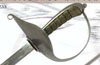
| Red Dragon Stage Combat Sabre (WS-001) |
Points: 5
|
Our Red Dragon Stage Combat Sabre is the perfect starter weapon for stage combat and theatrical work. The durable bowl style hilt protects the hands from stray blows, whilst the flexible high carbon steel blade features a rolled tip for added safety.
|
|
|
|
|
|
 |
|
| Hutton Fencing Sabre (SH2201) |
Points: 5
|
A proponent of the French school of fencing, Alfred Hutton was a British fencing master that did much to modernize sabre technique as it was fenced at the time. Hutton is acknowledged for breathing new life into the sport of fencing after it had fallen into the category of anachronistic, esoteric activities. The Hutton Sabre (SH2201) is crafted after an original with a stainless steel guard & a wire-wrapped imitation sharkskin grip. The blade & hilt of the Hutton sabre are closer to the style of the true military sabre. The blade is somewhat shortened & lightened, with a rounded tip for effective training.
|
|
|
|
|
|
 |
|
| French Napoleonic 1801 Cuirassier Sword Windlass |
Points: 10
|
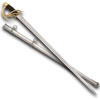
French Model 1801 Cuirassier’s sword is a heavy cavalry saber with a straight blade, as the French favored the thrust over slashing or cutting. This replica weighs a little over 3 lbs, the substantial mass needed to accomplish a lance-type thrusting attack. The distally tapered blade is over 1/4” thick at the hilt and is double-fullered like the originals.
|
|
|
|
|
|
 |
|
| Hanwei Charlemagne Saber (SH2288) |
Points: 30
|
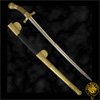
The "Saber of Charlemagne the Great" is a vital part of European history, being an important artifact in the Insignia of the Holy Roman Empire, of which Charlemagne was the first Emperor. The saber is housed today, together with the rest of the imperial insignia, in the Kunsthistoriches Museum in Vienna. The sword is of Eastern European origin, dating from the first half of the 10th century. How it became a part of the insignia is not known but its lavish decoration indicates that it was made for an important member of the nobility. It is clearly a cavalry saber, indicative of its origins in the Eurasian Steppes.
CAS Hanwei's version of the saber is faithful in detail to the weapon as it was conceived, even to the point of omitting the decorative 15th century repairs that render the original unusable.
|
|
|
|
|
|
|
|
Tags:
swords, sword, katana, wakizashi, tanto, japanese sword, medieval sword, viking sword, japanese swords, medieval swords, viking swords, knife, knives, saber, armour, movie swords, movie replicas, martial arts, sporting goods, sporting equipment,
|



 - Clearance sale
 - Add to favorites