|
|
|
 |
|
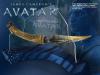
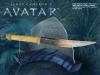
| Jakes Dagger - Avatar movie (NN8880) |
Points: 5

|
This replica is a screen accurate reproduction of the original ´Jake´s Dagger´ as seen in James Cameron´s Blockbuster ´Avatar´. It measures approx. 33 cm in length and ships with a stunning Display Base.
Sold Out
|
|
|
|
|
|
 |
|
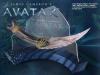
| Navi Braided Dagger - Avatar movie (NN8895) |
Points: 5
|
This replica is a screen accurate reproduction of the original ´Na´vi Braided Dagger´ as seen in James Cameron´s Blockbuster ´Avatar´. It measures approx. 49 cm in length and ships with a stunning Display Base.
Sold Out
|
|
|
|
|
|
 |
|
| Navi Curved Dagger - Avatar movie (NN8804) |
Points: 5
|
This replica is a screen accurate reproduction of the original ´Na´vi Curved Dagger´ as seen in James Cameron´s Blockbuster ´Avatar´. It measures approx. 49 cm in length and ships with a stunning Display Base.
Sold Out
|
|
|
|
|
|
 |
|
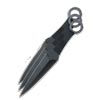
| Expendables Kunai 3 Piece Thrower Set (UC2772) |
Points: 4

|
Just like the throwers that Lee Christmas uses in The Expendables movie, this set of three throwers is perfectly balanced and amazingly accurate! This throwing knife set features three perfectly balanced throwing knives constructed of single pieces of anodized AUS-6 stainless steel. Each thrower measures 12 inch long and features an anodized double-edged, stainless steel blade with a black cord-wrapped handle with a finger hole. Included is a custom nylon sheath with boot loop and leg strap for multiple carrying options. United Cutlery, the industry leader in fine licensed film replicas and collectibles, has created a one of a kind masterpiece using top quality craftsmanship. For more than 20 years United has been the industry leader in producing top quality collectibles.
Sold Out
|
|
|
|
|
|
 |
|
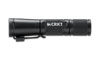
| CRKT Williams Personal Defense Flashlight (F1000) |

|
Williams Personal Defense Flashlight from CRKT. The CRKT flashlight series, designed by James Williams, provide powerful LED output light ideal for outdoor use, personal safety, self-defense, everyday-carry, and tactical applications. Durable Aluminum w/Removable Clip. Black Anodized Finish. Multiple Light Modes w/SOS Feature.
Sold Out
|
|
|
|
|
|
 |
|
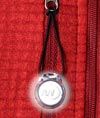
| Nite Ize ZipLit White 2 Pack (NZL2-07-02) |
|
The ZipLit is a simple-yet-indispensible little illumination device, threaded with durable cord thats easy to loop, cinch, and attach to the end of almost any jacket, coat, backpack or purse zipper, and just as easy to remove.
Encased in durable, water-resistant plastic housing, its bright L.E.D. provides instant visibility whenever you need it, so you can see your surroundings better and others can see you.
The ZipLit is the perfect way to increase the personal safety of kids walking to school, dog walkers, runners, campersanyone out early in the morning or late at night.
Combines a functional zipper pull with a bright LED light!
Sold Out
|
|
|
|
|
|
 |
|
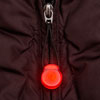
| Nite Ize ZipLit Red 2 Pack (NZL2-07-10) |
|
The ZipLit is a simple-yet-indispensible little illumination device, threaded with durable cord thats easy to loop, cinch, and attach to the end of almost any jacket, coat, backpack or purse zipper, and just as easy to remove.
Encased in durable, water-resistant plastic housing, its bright L.E.D. provides instant visibility whenever you need it, so you can see your surroundings better and others can see you.
The ZipLit is the perfect way to increase the personal safety of kids walking to school, dog walkers, runners, campersanyone out early in the morning or late at night.
Combines a functional zipper pull with a bright LED light!
Sold Out
|
|
|
|
|
|
 |
|
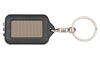
| Swiss Tech Solar Micro Light (ST50050) |
|
Swiss Tech Solar Micro Light 4 1/4" overall. Solar powered. NEVER NEEDS BATTERIES! Triple bright, 3-LED light. Push button control. Push button for ON, release for OFF. Runtime up to three hours in complete darkness on a full charge. Lightweight. Rugged black composition housing. Non-binding, swivel-action chain. Keyring.
Sold Out
|
|
|
|
|
|
 |
|
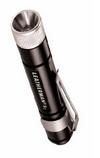
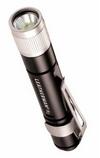
| Leatherman Serac S1 LED flashlight (831060) |
Points: 3
|
The Leatherman Serac S1 LED flashlight is "cute", but make no mistake, it's pretty fierce for its keychain size. With hard-anodized aluminum, voltage-regulated circuitry for consistent output, and precision-machined aluminum reflector, you'll wonder how we kept everything so small. Bigger isn't always better. AAA battery.
Sold Out
|
|
|
|
|
|
 |
|
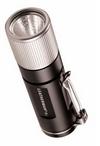
| Leatherman Serac S2 LED flashlight (831062) |
Points: 6
|
The Leatherman Serac S2 LED flashlight is all business. Sure it looks pretty innocuous hanging from your keychain, but don’t be fooled. With two settings pumping out 35 lumens on only one AAA battery, and an aircraft-grade aluminum body with stainless steel bezel, there's nothing little about it. And the S2 has a textured reflector and glass lens for a completely smooth, article-free light pattern
Sold Out
|
|
|
|
|
|
 |
|
| Leatherman Serac S3 LED flashlight (831064) |
Points: 7
|
When you want something done right you do it yourself. That's why we developed the Leatherman Serac S3 LED flashlight with 100 lumens, one battery CR123A, premium materials, and superior technology. Simply put, the size to performance ratio is unmatched for the price. Would you expect anything less from Leatherman?
Sold Out
|
|
|
|
|
|
 |
|
| CRKT Williams Tactical Applicatons Flashlight (F1010) |
|
Williams Tactical Applicatons Flashlight from CRKT. The CRKT flashlight series, designed by James Williams, provide powerful LED output light ideal for outdoor use, personal safety, self-defense, everyday-carry, and tactical applications. Durable Aluminum w/Removable Clip. Black Anodized Finish. Multiple Light Modes w/SOS Feature.
Sold Out
|
|
|
|
|
|
|
|
Tags:
swords, sword, katana, wakizashi, tanto, japanese sword, medieval sword, viking sword, japanese swords, medieval swords, viking swords, knife, knives, saber, armour, movie swords, movie replicas, martial arts, sporting goods, sporting equipment,
|



 - New items
 - Add to favorites